
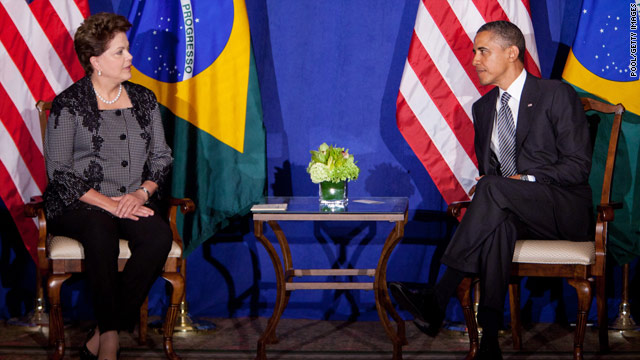
Member states of the United Nations get together this week for the U.N. General Assembly, an annual gathering to reacquaint themselves, catch up and map out plans for the year ahead. It's not unlike a family reunion, says Bruce Jones, director of the Center on International Cooperation at New York University.
"Everybody gets together once a year to pretend that everyone gets along,” Jones said. "Behind the scenes, everyone is scrambling to meet the cool kids or catch up with lost uncles, and there are family fights that have to be resolved.”
There's plenty of new family business to discuss, including the European debt crisis and the fact that Greece’s prime minister isn’t attending because of the financial problems in his country.
“I guess this is the cash-strapped uncle that can’t make it to the party this year,” Jones said. “There’s always a few of those. They don’t normally come from Europe, though.”
There’s the Palestinian bid to be recognized as a member state and the Palestinians' stalled peace process with Israel.
“It’s like the problem branch of the family," Jones said. "Everybody knows that there are problems, that usually everybody is polite when they come together at the annual gathering. This year, it’s not going to be possible to be polite. All the issues are right out for everybody to see.”
And then there are the new faces at the reunion: the leaders of new or transitional governments in Egypt, Tunisia, Libya and South Sudan. “I suppose they’re like sort of new arrivals in the family, newlyweds or something who haven’t come to the picnic before and are trying to find their way around,” Jones said.
He said that a big test for the U.N. over the next 10 or 15 years will be helping those new leaders acclimatize in a constructive way.
Click the audio player to hear the rest of the story from CNN Radio's Steve Kastenbaum:

ليست هناك تعليقات:
إرسال تعليق